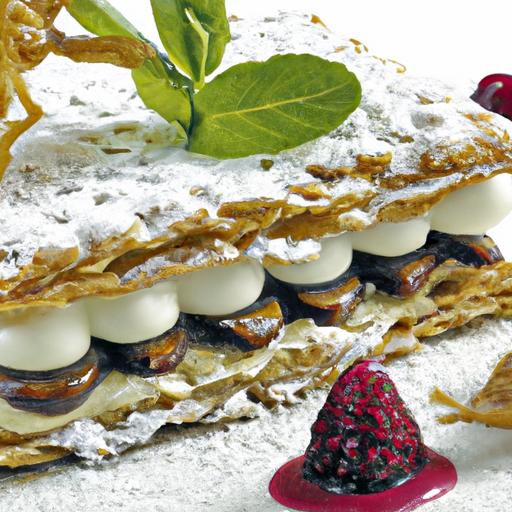


In the world of French patisserie, few desserts capture the imagination and palate quite like the millefeuille. Frequently enough translated as the “thousand leaves,” this delicate pastry weaves together layers of crisp, buttery puff pastry with luxuriously smooth creams, creating a symphony of textures and flavors in every bite. But beyond its elegant appearance and melt-in-the-mouth allure lies a story steeped in centuries of culinary artistry and innovation. Join us as we peel back the layers of history, technique, and tradition to unveil the secrets behind the millefeuille-an enduring emblem of French pastry perfection.
Millefeuille unveiled invites you on a journey through the delicate art of puff pastry crafting-where simple, flaky sheets transform into layers of golden perfection. This classic French dessert is a testament to precision, patience, and creativity. Originating in 17th-century France, its name literally means “a thousand leaves,” referring to the countless flaky layers that define the pastry’s texture. Whether you dream of recreating the traditional vanilla custard filling or experimenting with avant-garde flavors like matcha cream or salted caramel ganache,this recipe demystifies every step.
Prep and cook Time
- Planning time: 1 hour (including resting and chilling)
- Cooking time: 30 minutes
- Total time: 1 hour 30 minutes
Yield
Serves 8 elegant slices, perfect for intimate gatherings or special celebrations.
Difficulty Level
Advanced – mastering puff pastry and assembly techniques requires patience, but the impressive results are worth every effort.
Ingredients
- For the Puff Pastry:
- 2 ½ cups all-purpose flour, sifted
- 1 tsp fine sea salt
- 1 cup unsalted butter, very cold and cubed
- ⅔ cup ice-cold water
- For the Classic Pastry Cream Filling:
- 2 cups whole milk
- ⅔ cup granulated sugar, divided
- 4 large egg yolks
- ¼ cup cornstarch
- 2 tsp pure vanilla extract
- 2 tbsp unsalted butter
- For the Icing:
- 1 cup powdered sugar
- 2 tbsp milk
- 2 tbsp melted dark chocolate (for feathered decoration)
Instructions
- Prepare the Puff Pastry Dough: in a chilled bowl, combine all-purpose flour and salt. Add the cold butter cubes,cutting them into the flour with a pastry blender or fingertips until mixtures resemble coarse crumbs with visible pea-sized butter pieces.
- Add ice-cold water gradually, stirring gently until a rough dough forms. Avoid overworking for a tender dough.
- Shape the dough into a rectangle, wrap in plastic, and chill for 30 minutes.
- Laminate the dough: On a lightly floured surface, roll dough into a long rectangle approximately 10×20 inches. Fold into thirds (like a letter). Turn 90 degrees, roll again, and fold. Repeat this process 4 times to create thousands of layers. Chill for 30 minutes after folding.
- Roll the chilled dough> to ¼-inch thickness. Cut into three even rectangles (roughly 9×3 inches).Prick the surface with a fork to prevent puffing, than chill 15 minutes.
- Bake the sheets: Preheat the oven to 400°F (200°C). Place parchment-lined trays with puff pastry sheets, cover with another parchment and a second baking tray to keep them flat. Bake 15 minutes, remove top tray/parchment, and bake an additional 10-15 minutes until a deep golden crisp is achieved. Cool completely.
- Make the pastry cream: Heat milk in a saucepan until nearly boiling. In a bowl, whisk egg yolks, half the sugar, and cornstarch until smooth. slowly temper the hot milk into egg mixture, then return to saucepan. Stir constantly over medium heat until thick and bubbly, about 3-5 minutes.
- Remove from heat, stir in remaining sugar, vanilla extract, and butter until glossy. Transfer to a bowl, cover surface with plastic wrap, and chill until cold and firm.
- Assemble the millefeuille: Place one puff pastry sheet on a serving plate. Pipe or spread an even layer of pastry cream.Repeat layering-pastry sheet, cream, pastry sheet, finishing with a pastry sheet.
- prepare icing: Mix powdered sugar with milk to a thick but spreadable consistency. Spread thinly over the top layer of pastry.
- Create decoration: Pipe parallel lines of melted dark chocolate over the icing. Using a toothpick drag through lines perpendicularly, alternating direction, to create a classic feathered effect.
- Chill the assembled millefeuille for at least 1 hour before slicing with a serrated knife for clean layers.
Tips for Baking Success
- Use cold ingredients and tools-warm butter or dough will compromise the puff and flaky texture.
- Do not overwork the dough to avoid tough layers.
- Keep layers flat while baking by using a second baking tray and parchment paper as a weight.
- Chill pastry sheets thoroughly before baking to ensure even puffing.
- For a modern twist,try fillings like matcha pastry cream or salted caramel ganache.
- Make-ahead: Puff pastry and pastry cream can be prepared 1 day in advance; assemble just before serving to keep layers crisp.
Serving Suggestions
Present millefeuille slices on elegant china plates, accompanied by a light dusting of powdered sugar and fresh berries for contrast. Garnish with edible flowers or a sprig of mint to amplify visual appeal. Pair with a cup of rich espresso or a glass of chilled champagne for a truly refined experience.
| Nutrient | Per Serving (1 slice) |
|---|---|
| Calories | 410 kcal |
| Protein | 6 g |
| Carbohydrates | 45 g |
| Fat | 22 g |

discover other timeless French favorites in our French pastry recipe collection and elevate your baking repertoire with confidence.
Q&A
Q&A: Millefeuille Unveiled – Layers of French Pastry Perfection
Q1: What exactly is a Millefeuille?
A Millefeuille,often known as a Napoleon,is a classic French pastry renowned for its delicate,flaky layers. the name literally means “a thousand sheets,” capturing the essence of its multiple layers of crisp puff pastry stacked with luscious cream or custard filling. Each bite is a harmonious blend of crispness and creaminess, a true testament to French patisserie artistry.
Q2: Where did the Millefeuille originate?
While the exact origins are a bit foggy, the Millefeuille dates back to the 17th century in France. It evolved from early layered pastries and became a staple in French patisseries throughout the 18th and 19th centuries. Its precise technique and elegant presentation have cemented it as a symbol of French culinary sophistication.
Q3: What makes the puff pastry in a Millefeuille so special?
the real magic lies in the puff pastry, or “pâte feuilletée,” which is a marvel of technique and patience. It involves folding and rolling layers of dough and butter repeatedly to create hundreds of ultra-thin buttery sheets. When baked, these layers puff up beautifully, creating a light, flaky texture that contrasts deliciously with the creamy filling.
Q4: What fillings are traditionally used in a Millefeuille?
Traditionally, Millefeuille is filled with smoothly set pastry cream, often flavored with vanilla. Some versions mix in whipped cream for a lighter texture, called “crème légère.” Modern takes may include fruit preserves, chocolate, or flavored custards, but the classic is all about that rich, velvety crème pâtissière.
Q5: How is a Millefeuille typically decorated?
Presentation is key! The top layer of puff pastry is usually glazed with a thin coat of white icing and then adorned with finely piped chocolate or caramel lines that are feathered with a toothpick for a signature marbled effect. This elegant design is as iconic as the pastry itself, signaling the care and artistry involved.
Q6: Can millefeuille be made at home, or is it a professional pastry only?
While it’s undeniably a challenge, passionate home bakers can tackle Millefeuille with patience and practice. The puff pastry alone requires skill and time, but many opt for store-bought puff pastry to focus on mastering the filling and assembly. The delicate layering and baking demand attention to detail, but the rewarding taste is well worth the effort.
Q7: Why has millefeuille endured as a beloved dessert through the centuries?
Millefeuille’s enduring appeal lies in its delicate balance-crisp yet creamy, rich yet light, simple yet refined. It encapsulates the elegance of French baking and the celebration of texture and flavor harmony. Each layer tells a story of craft, tradition, and indulgence that continues to captivate dessert lovers worldwide.
Q8: Are there regional variations of Millefeuille in France or beyond?
Yes! While the classic Parisian Millefeuille reigns supreme, regional French patisseries sometimes add unique twists, like almond frangipane or fruit layers. Internationally, variations appear under different names, sometimes incorporating local flavors or presentation styles, but the essence of layered pastry perfection remains.
Unwrapping the Millefeuille is like turning the pages of a delicious story-layer by layer, it reveals the artistry and passion baked into each flaky sheet and silky filling. Whether enjoyed in a quaint Parisian café or crafted in your own kitchen, Millefeuille invites you to savor the timeless dance of texture and taste that only French pastry can deliver.
To Conclude
As the final flaky layer settles and the lingering sweetness melts on your palate, the millefeuille reveals itself not just as a dessert, but as a masterclass in balance, technique, and tradition. Every delicate sheet of pastry and luscious swirl of crème embodies centuries of French artistry, inviting us to savor more than just a treat – but a story. So next time you unwrap this layered marvel, remember that beneath its crisp surface lies a rich tapestry of history and craftsmanship, making each bite a celebration of culinary perfection.